This post contains affiliate links; I may earn a commission at no cost to you. I am an independent creator not endorsed by any platform, and all information is subject to change.
A thought of starting a Fourthwall shop grew from having an Etsy shop. I just wanted something where I had more control. That’s when I started researching Fourthwall vs Shopify.
Also, I didn’t have to compete with millions of other sellers in search results or on price, could own my audience through an email list, and have the design that I wanted.
Those were my strongest reasons for looking for a secondary platform to sell on.
Fourthwall vs Shopify: The 30-Second Verdict
- Choose Fourthwall if: You are a creator (YouTube/Etsy) who wants to sell digital products or merch with zero monthly fees, built-in memberships, and a Merchant of Record that handles all global taxes/VAT for you.
- Choose Shopify if: You are building a massive retail brand with 500+ unique items, need deep custom coding, and have the budget for $39+/month plus extra paid apps.
- My Pick: After managing my gabidigitalproducts Etsy shop, I chose Fourthwall. It’s a shop builder that allows me to sell my digital products for free and lets me focus on creating and promoting rather than filling out complex tax paperwork.
The “Hidden Cost” Reality Check (Shopify vs Fourthwall)
01 — Pricing reality check
| Plan | Fourthwall | Shopify | Real difference |
|---|---|---|---|
| Entry point | $0 / mo (Free) $15 / mo (Pro) |
27 €/mo (monthly) · 19 €/mo (annual)Intro: 1 €/mo for 3 months | FW saves 228 €–324 €/yr |
| With essential apps | Built-in Tools | 100 €–300 € / monthDownloads + Email + Marketing apps | FW saves ~1,000 €+/yr |
| Fee on digital sales | 5% (Free) / 0% (Pro) | 0% + App Subscription | Check your volume |
| Tax handling | Fully handled (MoR) | You handle itResponsibility stays with you | FW removes the headache |
| Cost until you sell | $0 (Free Plan) | 27 €+ regardless | FW = zero risk to start |
02 — Real creator POV
| What actually matters | Shopify | Fourthwall |
|---|---|---|
| Getting started | Setting up a businessHours to days | Uploading a fileUnder an hour |
| Selling digital products | Needs a third-party app | Built in (Native) |
| Memberships & donations | Apps required | Built in (0% donation fees) |
| Taxes (VAT / GST) | Manual setup & compliance | Done-for-you (Merchant of Record) |
| Mental load | High — integrations & configs | Low — automated backend |
| Customization | Total control (Coding) | Easy (No-Code or CSS/HTML) |
| Best for | Ecommerce operators | Creators & Digital Sellers |
Features and pricing are based on research as of April 2026 and are subject to change. This comparison reflects my perspective as a digital seller and does not constitute financial or legal advice.
Also, both platforms charge 2.9% + $0.30 per US credit card transaction. Not included in the figures above.
Looking at these numbers, the financial gap is clear; however, the bigger issue isn’t the subscriptions, it’s the mental load.
For example, as a solo creator, every hour spent on VAT compliance or app troubleshooting is time lost for creating content or designing new products.
Therefore, I realized I didn’t want that stress. Instead, I just wanted a calm, simple selling process.
Struggling with The Technical Side?
To help, I created the FREE Growth & Discovery Checklist (with Resell Rights!) to give you a clear roadmap for setting up your website and avoiding “analysis paralysis.”

Understanding the “Merchant of Record”
If you sell a digital product to someone in the UK, Germany, or Australia, you technically owe those countries digital tax (VAT or GST). Every country has different international digital tax laws and GST rules for digital products. On most platforms, figuring out those percentages and sending that money to foreign governments is your problem.

Shopify: You are the Merchant
When you use Shopify, they provide the “tools,” but you are the legal owner of the transaction.
- The Reality: You have to set up tax “Nexus” in different states and countries. You have to collect the tax, keep it in a separate “bucket,” and then file paperwork to pay it. To be fair, Shopify does offer a tool called Shopify Tax that helps with calculations, VAT invoices, and automates filing in some instances, but setting it up is on you, coverage varies by region, and the legal responsibility never leaves you.
- The Risk: If you forget to file VAT for your European customers, you’re technically breaking the law. For a solo creator, that is a massive “mental load” I didn’t want.
Fourthwall: They are the Merchant of Record (MoR)
This was the “Aha!” moment for me. Fourthwall acts as the Merchant of Record.
- What that means in English: When a fan buys your $20 digital guide, they are technically buying it from Fourthwall.
- The Benefit: Fourthwall calculates the tax, collects it, and pays it to the government for you. You just receive your profit. They take the legal responsibility, not you.

That’s exactly why this is the #1 reason I chose Fourthwall. I want to create my Canva templates and promote them on my blog, YouTube, Instagram, and grow an audience, not worry about whether I’ve sent the right percentages. It’s better to let professionals handle that.
What I’m Actually Selling: 5 Digital Product Ideas
Running an Etsy shop taught me that you don’t need thousands of products, you need the right assets. Here are five digital products that work perfectly with a Fourthwall shop:
- eBook templates. This one went viral because it’s very targeted for busy creators who want to make an eBook fast. I also include resell rights, so buyers can use it commercially without stress.
- Branding kits. These are my best-sellers. New Etsy sellers can use them to launch their shops and even start selling right away with included assets.
- Editing packs. You won’t get traffic instantly, so you need content. These help you create better videos to promote your products.
- Listing templates. These save time and make your products look more professional, which leads to more sales.
- Freebies. Perfect for attracting people, testing demand, and upselling your paid products.
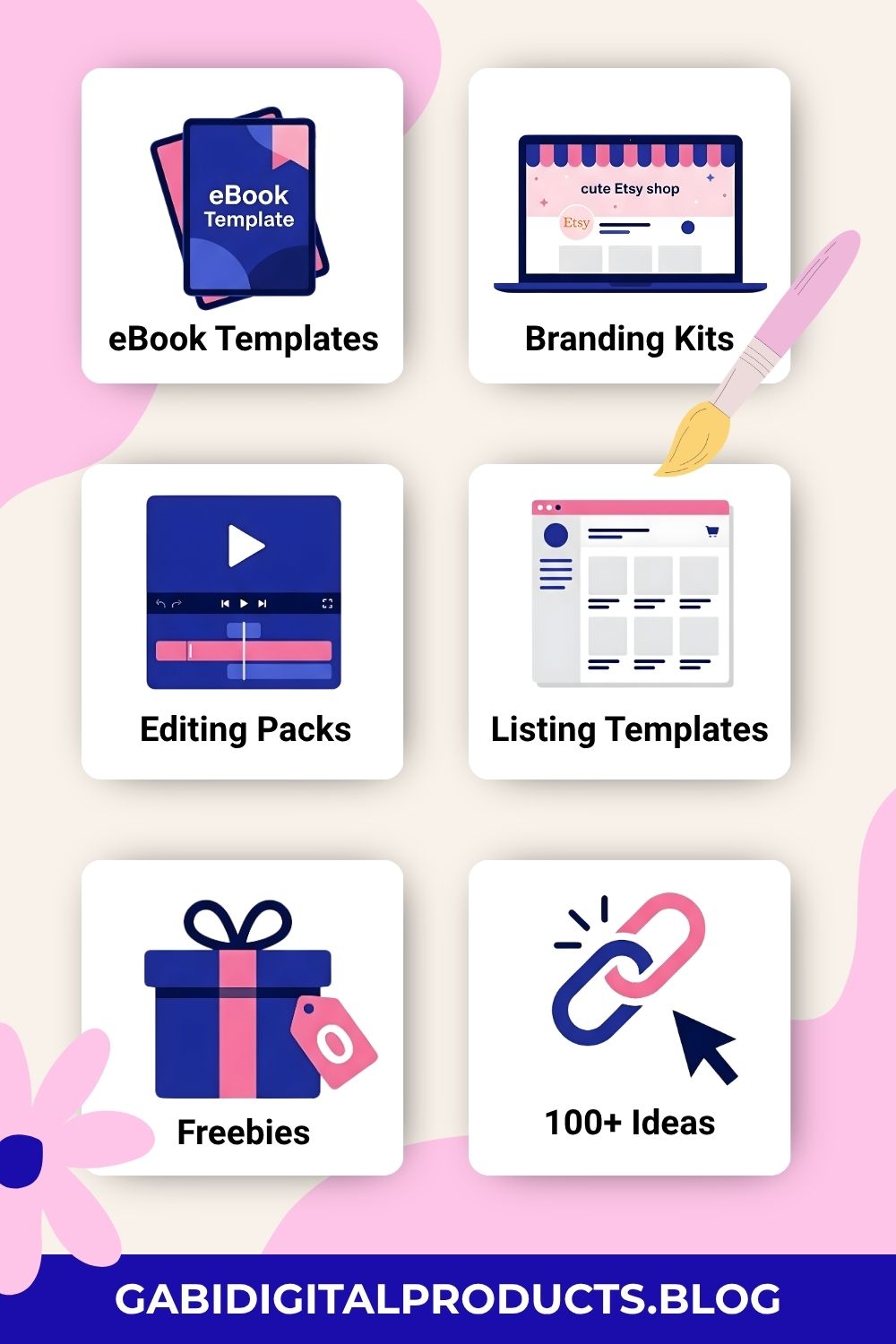
If you’re still wondering what digital products you could list after opening a shop, I’ve already done the brainstorming for you in this list of 100 Digital Product Ideas You Can Make This Week.
The “One Hour Workflow”
On Fourthwall, once you create your storefront, it’s extremely easy to list a product.
- Go into the Products category and select Create New Product.
- You’ll see three options: Design a New Product, Sell Something I Have, and Sell Digital Product. Below that, there are more options like Create Bundle Product, Combine Product Listings, and Sell Gift Cards (I’ve heard these are newer features, the bundling option is super cool). Since I sell only digital products, I select Sell Digital Product.
- Then you insert the product details: product name, URL slug, description, product category, price, and upload listing images (you can upload up to 12). If you’re selling Canva templates, you need a Canva Pro account to create a template link. Following Canva’s official template sharing guide, you place that link inside a PDF and upload the PDF in the Files Delivered on Purchase section on Fourthwall.
That’s why Fourthwall is great, it’s super easy. On Shopify, there are tons of customization options and tools (which is great for big ecommerce brands), but you might still be stuck picking a theme. Don’t get me wrong, that’s important, but listing products is what actually makes you money.
The Final Verdict: Fourthwall vs Shopify
Overall, after comparing Fourthwall vs Shopify, I’ve come to these conclusions:
- Choose Shopify if: You want a store that can grow into a massive, global brand. If you love having total control over every pixel of your design, want access to thousands of specialized apps, and don’t mind spending a few hours a month managing your own tax settings and business backend. It’s a professional-grade tool for people who want to be Full-Time Store Owners.
- Choose Fourthwall if: You are a Digital Creator. You want to sell things like your custom eBook templates or Etsy shop branding kits, you want zero monthly bills, and you want a “set it and forget it” system that handles the scary tax stuff for you.
For me, having more than an Etsy shop wasn’t just a business move, but also a move for freedom and peace of mind. I don’t want to be suspended by a bot by accident. Competition is normal, but there are so many sellers on marketplaces that it can feel tiring, with low prices and constant changes. I’m not shutting it down, but I’m definitely focusing more on what I can control.
I actually talked about this in my Fourthwall digital products guide, where I noticed that features like built-in upsells actually lead to customers spending more than they do on marketplaces.
Don’t forget to claim your $20 credit if you choose to use Fourthwall, and grab your freebies!
Until next time,
Gabi. <3