Can you make money selling PLR? Short answer: yes. Longer answer: yes, but not in the way most YouTube videos promise you.
I’ve been selling PLR and MRR digital products for about two years. I have over 160 listings across Etsy and my own site, gabidigitalproducts.com. Over the years, I’ve bought PLR and resold it. I’ve also spent countless hours moving away from PLR and creating almost everything myself instead. So this isn’t just a theory. This is what actually happened to me, plus one public example of what happens when things go wrong.
TL;DR: Yes, you can make real money selling PLR and MRR digital products, even $10k/month is possible, but it’s not the overnight, passive income YouTube promises. It takes real work: quality products, smart pricing, and consistent marketing, just like any other business. After two years and 80+ products, the biggest lesson is this: reselling cheap PLR as-is rarely works because you’re competing in a race to the bottom, but higher-quality products with real design work behind them can sell well above the typical $2-5 range, especially off Etsy, on your own site, where buyers spend 2-3x more per order.
How I Actually Got Into This
Two years ago, I had a gaming YouTube channel (and I still do, with almost 32k subscribers). It was doing fine, but I didn’t love being 100% dependent on someone else’s IP. If a game stops trending, your income disappears with it. Not only that, but depending on someone else’s IP limits your income potential and opportunities. I wanted something that was actually mine.
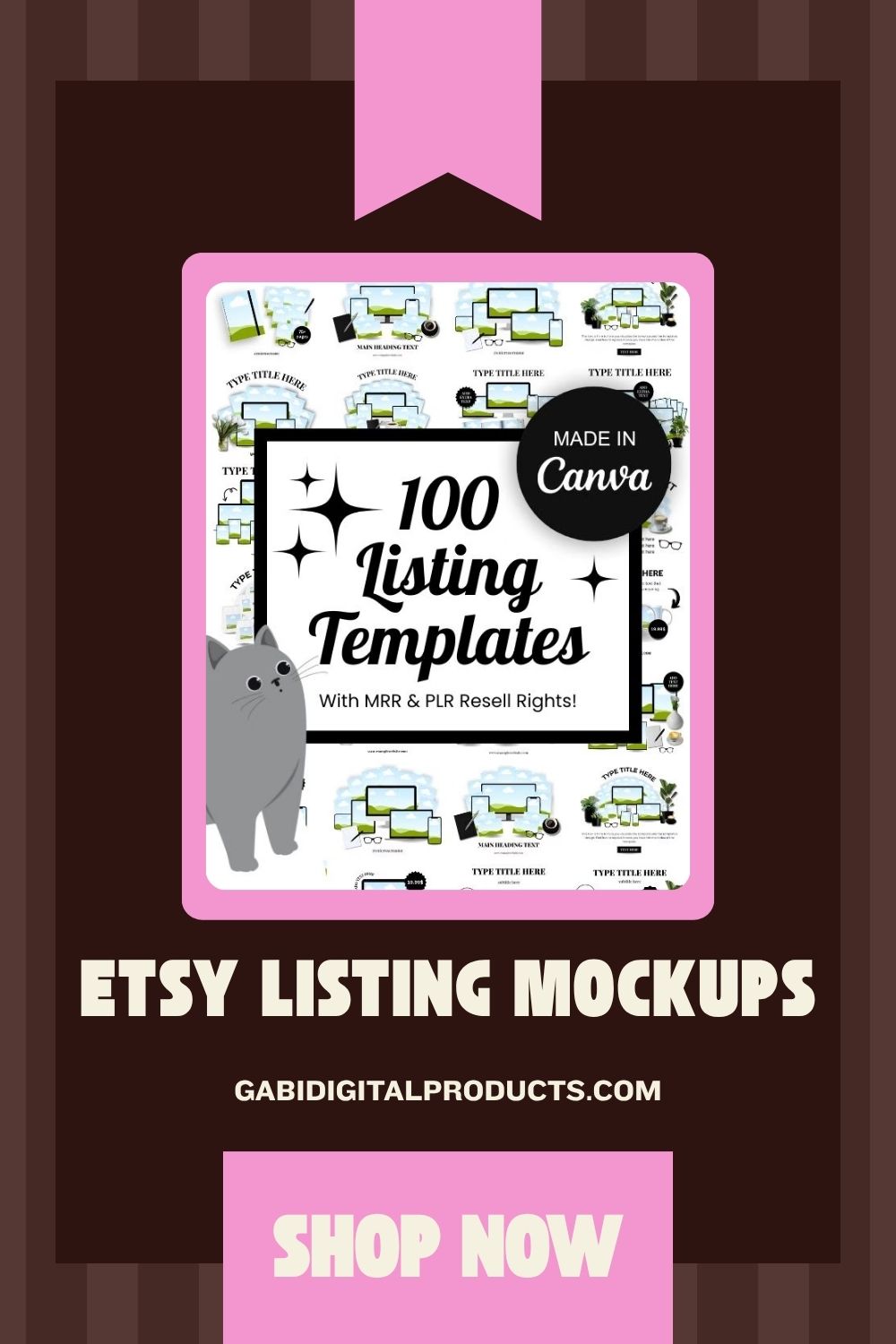
So I listed my first digital product on Etsy: simple Etsy listing mockup templates, 100 of them. Dead simple product. It sold like hotcakes. It had nothing to do with the gaming niche.
Here’s the part people often skip: I originally bought a similar mockup product from another seller first. I studied how it was made, checked the quality, and then decided not to resell it as-is. I rebuilt my own version and made it better. At the time, I was terrified of Etsy’s Terms of Service because I was a newbie. I also honestly wanted to create my own style. That one decision, buy to learn, not to resell, basically became my whole business model from that point on.
That experience made me realize I could bring something different to this niche. So many products looked the same, and I wanted to create PLR that people would genuinely enjoy using themselves. Products that save time, feel worth the money, and give sellers something they are actually proud to resell.
Does Reselling PLR As-Is Actually Work?
Yes. But it depends on what you buy and where you sell it.
If you buy a cheap $2 template and try to resell it for $2, you probably won’t make much money. After fees, taxes, and product costs, your profit disappears. Plus, you’re competing with many sellers offering the same thing for cheap or even cheaper.
I watched this happen in real time: a competitor of mine has around 320 listings and about 1,600 sales over two years, yet she’s still barely profitable. Sales numbers don’t tell the full story. You still have to pay for the PLR products, platform fees, taxes, and other business costs. Low prices can make it very hard to build healthy profit margins.
Her shop is built around cheap, easily copied PLR products, which means she’s competing in a market where many people sell the same or similar items. She’s a genuinely nice person who even supported my shop early on, so this isn’t a criticism of her. It’s simply what happens when your prices are low and you’re competing in a crowded market.
Now compare that to buying from a seller who puts real skill into their products. Their designs have a clear theme, solve a specific need, and include enough detail that changing a few colors is not the only customization possible. I actually broke down what that looks like in practice with one product, from launch to first sales in 48 hours.
With better-quality products, you can price them above the $5–6 range and still get sales, even if you resell them as-is.
One rule: don’t rely only on Etsy. Etsy is great for traffic, but it can become a race to the bottom. Your own website gives you more room to show the value of quality digital products.
Etsy vs. My Own Website: The Real Numbers
This is where it gets interesting. My Etsy orders have actually dropped over time, and I’m fine with that, because I stopped chasing sales count and started chasing profit.
On Etsy, people rarely spend more than a few dollars per item, and getting anyone to pay even $3 for a digital product is genuinely hard, it’s flooded with content and everyone’s undercutting everyone.
On my own website, the same type of buyer often spends twice as much: $20–40 per order, sometimes even more. People are also much more willing to pay $7+ VAT for a product they might argue over paying $3 for on Etsy.
I don’t need 100 sales to make €100 anymore. Sometimes I only need 2–3 orders because customers often buy multiple products in one cart.
Google and AI search traffic have become a real driver of this too, my mrr/plr digital products page alone brings in consistent search traffic every month, and buyers coming from search tend to spend more than Etsy browsers do.
My One Big Flop (And What It Taught Me)
I don’t have a long list of failures, but I have one that stands out: puzzle-style Valentine’s Day Canva templates. The idea was cute, you design one image, split it into a puzzle grid, and when posted on Instagram it all looks connected.
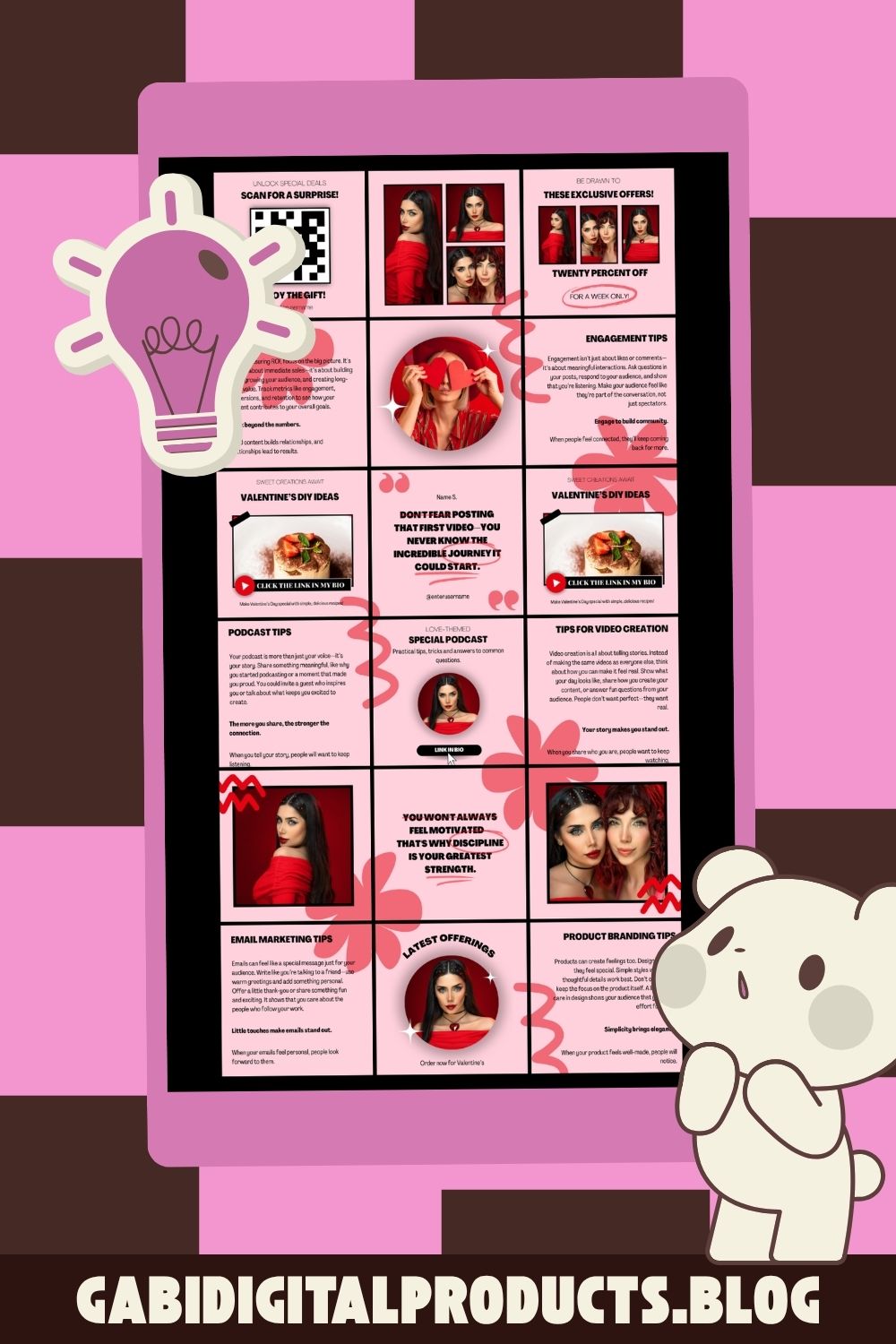
In theory, adorable. In practice, it required more design skill than I had at the time. The instructions were confusing for buyers, and Instagram changed its aspect ratio requirements right around launch. It flopped completely.
The lesson wasn’t “avoid creative ideas.” The answer was simple: buy from (or become) someone who understands the platform. They know the quirks, trends, formats, and what people actually use.
That experience is what you’re paying for when you buy quality PLR. It’s also what’s missing when you buy from someone who is only repackaging products.
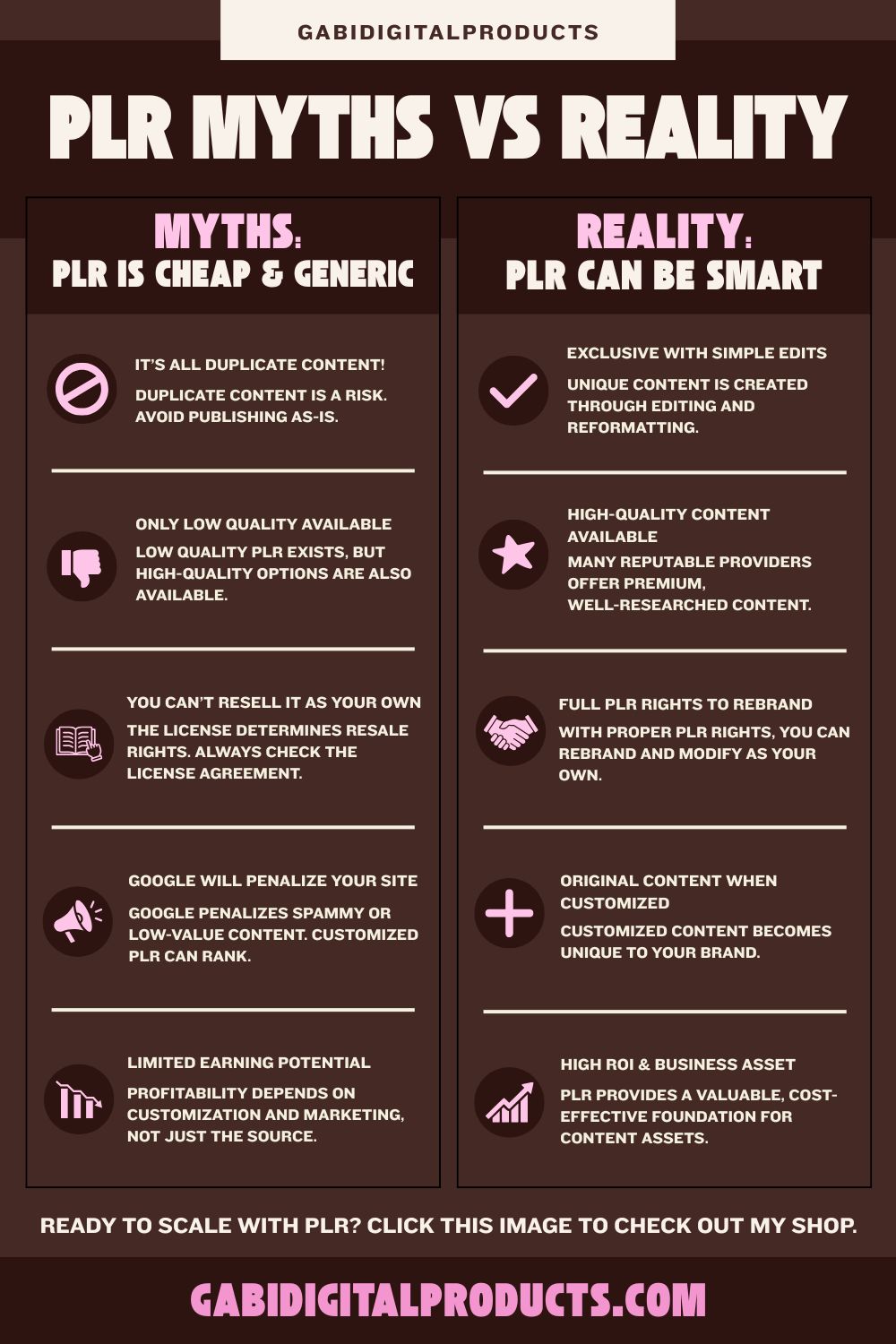
The Biggest Myth: “Make $10k/Month Passive Income Reselling PLR”
When people ask if you can make money selling PLR, they often bring up claims like “$10k/month passive income.” I’ll say this honestly: a lot of those claims are simply not true. If it were actually that easy, everyone doing it would be making $10k a month.
The myth these videos sell is that PLR removes the hardest part of the business: creating the product. This makes it sound like all you have to do is list it and forget about it. In reality, you still need to market it and build an audience. You also need to understand what makes a product valuable before you can sell it yourself. If you aren’t sure where to start looking, I recently compiled a guide on finding the best, high-quality PLR products on Reddit to help you cut through the noise.
I remember a Reddit story about someone who spent hundreds of dollars on a resell-rights course. They ran ads, did marketing, and still never made a sale. They called the seller a grifter. But here’s the thing: they were reselling a course, a higher price-point item people don’t impulse-buy from a stranger.
A $20–40 template pack is often an impulse buy. Low-ticket digital products follow a completely different strategy than expensive courses.
Meanwhile, a $400 course usually requires an audience, trust, and a personal brand before someone is ready to buy. No PLR license fixes that gap.
Can you make $10k a month? Yes. Is it easy? Absolutely not.
If I Were Starting From Scratch in 2026
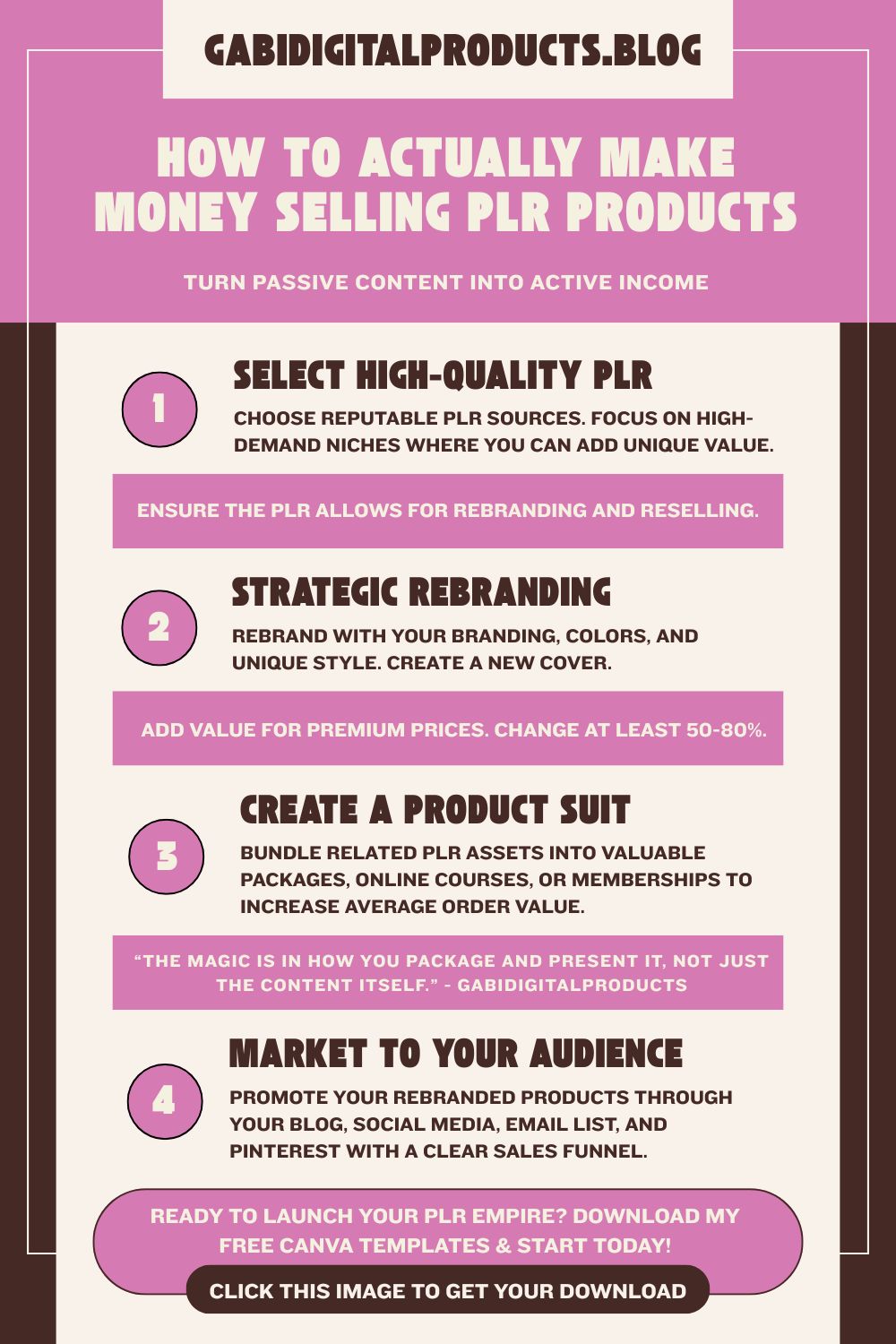
- Vet who you buy from. A lot of Etsy “PLR sellers” bundle in products they don’t actually have commercial rights to resell. It’s a real problem, and it can get your shop shut down. Look for sellers with a consistent design style. That’s usually a sign that one person is actually creating the products. Be careful with anyone selling handmade-style products for $2. If you want a shortcut, I rounded up 7 PLR websites I’d actually trust in 2026.
- Skip the “test a niche first” step: A good PLR seller has often already done some of that research. If someone keeps selling the same type of product in different themes, there is usually a reason it works. That’s how I approach my own products. But if you’re not sure before buying, do your own research. Look at current trends (like cottagecore or coquette), check competitor reviews, and see if people are still buying similar products.
- Start on Etsy, but don’t stay there forever. Etsy is great for learning how online selling works. You learn customer service, how to handle reviews, how to price products, how to study competition, and more. But Etsy’s algorithm is not in your control, and it can change at any time. Once you understand the basics, focus more on your own website. You control your prices and keep more of your profit.
- Budget realistically. If money is tight, start with one solid brand kit, one Instagram template bundle, and one Pinterest bundle. Then rebrand those same assets for different niches and themes. When time is your biggest limitation, not your budget, keep buying new packs and listing them. This saves you hours of design work and helps you build a larger product catalog faster.
So, Can You Really Make Money Selling PLR?
Yes, but “money” here means real, sustainable profit, not a $10k/month fantasy from a YouTube thumbnail. It takes quality products, smart pricing, and a real audience. You can’t just hope strangers find your listing and buy from you without knowing your brand.
I’ve done it with 80+ products over two years. It still requires me to create, list, and market them every week, not just once. That’s exactly why I’m writing this blog post too. 🙂
If you want to see what “quality PLR that’s actually worth reselling” looks like in practice, you can browse my full catalog of MRR/PLR digital products or check out the Canva templates with resell rights, the same category of product that started this whole journey for me.

Leave a Reply